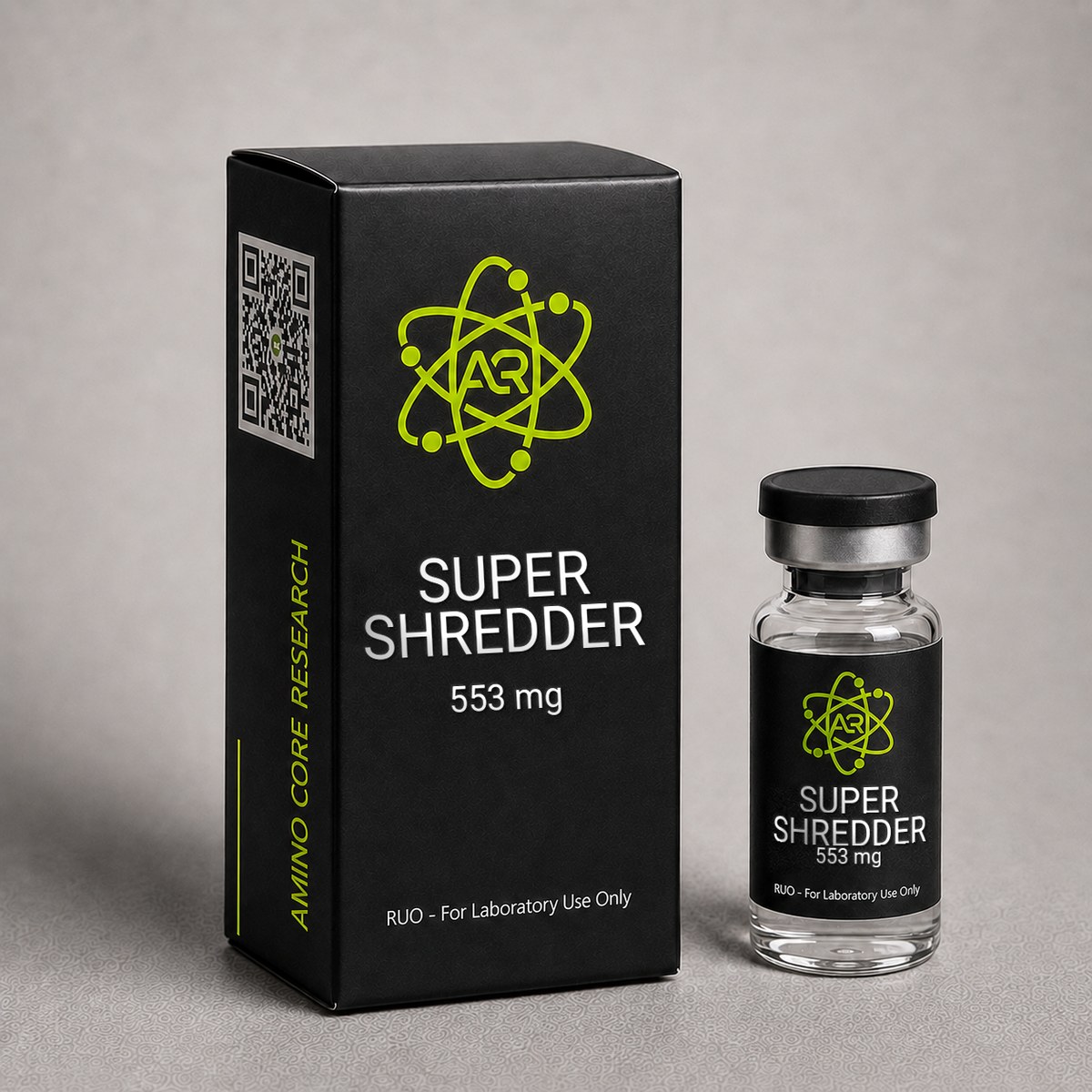
≥99%HPLC Purity
COAIncluded
USAShipped
AC-SSH
Super Shredder Blend Peptide
Multi-component metabolic research blend (L-carnitine, MIC complex, ATP and cofactors) supplied for in-vitro study of the carnitine-shuttle and hepatic lipid-metabolism pathways.
$180.00
In stock — ships next business day
Quick Facts
| SKU | ACR-BL-SS |
|---|---|
| CAS Number | N/A (Multi-Component Blend) |
| Molecular Formula | Blend - Multiple Compounds |
| Molecular Weight | Variable (blend formulation) |
| Sequence | Blend of: AOD-9604 (HRDKVFGANSLYQRQNHYDLDFGTHHITDFLKVAEEYLLKK-COOH 16 aa C-terminal fragment hGH 177-191 with Tyr addition), CJC-1295 (Y-D-Ala-DAEFRHDS-Aib-EERQKLIQLYRSLHQLAAK with optional DAC), Ipamorelin (Aib-His-D-2-Nal-D-Phe-Lys-NH2), and Tesamorelin (trans-3-hexenoyl-Tyr-Ala-Asp-Ala-Ile-Phe-Thr-Asn-Ser-Tyr-Arg-Lys-Val-Leu-Gly-Gln-Leu-Ser-Ala-Arg-Lys-Leu-Leu-Gln-Asp-Ile-Met-Ser-Arg-Gln-Gln-Gly-Glu-Ser-Asn-Gln-Glu-Arg-Gly-Ala-Arg-Ala-Arg-Leu-NH2) |
| Purity | ≥99% |
| Physical Form | Lyophilized Powder |
| Storage | Store at -20°C |
What is Super Shredder Blend?
Multi-compound metabolic research stack combining peptides targeting lipolysis, GH secretion, and appetite regulation pathways. Designed for synergistic metabolic research where multiple pathways need simultaneous modulation for comprehensive fat metabolism studies.
What is Super Shredder Blend?
Super Shredder Blend is a multi-component research peptide formulation developed for investigators studying integrated metabolic pathways, lipolysis, and growth hormone (GH) axis modulation. Unlike single-compound preparations, this blend combines complementary peptide research tools — typically AOD-9604, Tesamorelin, CJC-1295, and Ipamorelin — that act on distinct but converging molecular targets. The result is a research platform that allows simultaneous investigation of pituitary GH secretion, direct adipocyte lipolysis, and visceral adipose tissue (VAT) dynamics within a single experimental system.
The constituent compounds were each developed across decades of endocrinology research. AOD-9604 was characterized by Heffernan and colleagues as a synthetic analog of the C-terminal fragment of human growth hormone (hGH 177–191), preserving lipolytic activity while lacking the diabetogenic and somatogenic effects of full-length GH (PMID 11713209). Tesamorelin (TH9507) is a stabilized GHRH(1–44) analog approved as a comparator molecule in clinical investigation of HIV-associated lipodystrophy and VAT reduction (PMID 17595187). CJC-1295 is a GHRH(1–29) analog with extended half-life, and Ipamorelin is a selective pentapeptide ghrelin receptor (GHS-R1a) agonist that triggers pulsatile GH release without significant cortisol or prolactin elevation (PMID 9849822).
The research significance of blending these compounds lies in pathway synergy. Endogenous GH secretion is regulated by two opposing hypothalamic signals: GHRH (stimulatory) and somatostatin (inhibitory). Ghrelin mimetics like Ipamorelin act through a parallel pathway, amplifying GHRH-driven pulses while suppressing somatostatin tone. AOD-9604 bypasses the GH receptor entirely, acting directly on adipocyte beta-3 adrenergic signaling to stimulate lipolysis and inhibit lipogenesis. By combining a GHRH analog (Tesamorelin or CJC-1295), a GHS-R agonist (Ipamorelin), and a direct lipolytic agent (AOD-9604), researchers can model multi-level metabolic intervention in preclinical systems.
What makes Super Shredder Blend distinctive among research peptide preparations is its convergent mechanism design. Single-compound research often fails to capture the cross-talk between somatotropic and adipocyte signaling that occurs in intact physiology. Published literature documenting GHRH-ghrelin synergy (Bowers et al., PMID 1903425) demonstrates that combined stimulation produces GH pulses 3–5× larger than either pathway alone. This blend allows investigators to reproduce that synergy in vitro and in preclinical models, while the inclusion of a non-GH-mediated lipolytic fragment (AOD-9604) provides a GH-independent comparator arm within the same preparation.
All components in the AminoCore Research Super Shredder Blend are supplied at ≥99% HPLC purity as a co-lyophilized powder. The formulation is intended strictly for in vitro and preclinical research applications and is not for human consumption, therapeutic use, or veterinary administration.
Mechanism of Action
Super Shredder Blend is a multi-component research formulation designed to engage several converging metabolic pathways simultaneously. Each constituent peptide in the blend targets a distinct receptor or signaling cascade, and the resulting combination produces an integrated set of effects in preclinical metabolic models. The mechanism is best understood by examining each pathway individually before considering their convergence on adipose tissue and energy balance.
1. Lipolytic Fragment Activity (AOD-9604-type signaling)
The C-terminal hGH fragment (amino acids 177–191), commonly referred to as AOD-9604, has been studied as a putative beta-3 adrenergic receptor (β3-AR) modulator in adipocytes. Activation of β3-AR stimulates adenylyl cyclase, raises intracellular cAMP, and activates protein kinase A (PKA). PKA in turn phosphorylates hormone-sensitive lipase (HSL) and perilipin, promoting triglyceride hydrolysis and release of free fatty acids from adipocyte lipid droplets. Research has reported lipolytic activity without the diabetogenic effects associated with intact growth hormone.
2. GHRH Receptor Activation (Tesamorelin/CJC-1295 component)
Growth hormone-releasing hormone analogs bind to the GHRH receptor (GHRHR), a class B G-protein-coupled receptor expressed on somatotrophs of the anterior pituitary. Receptor activation stimulates Gs-coupled cAMP production, increases intracellular calcium, and triggers pulsatile release of endogenous growth hormone (GH). Elevated GH subsequently stimulates hepatic IGF-1 production and acts directly on adipocytes via the GH receptor to promote lipolysis and reduce lipogenesis. Tesamorelin has been specifically studied for its effect on visceral adipose tissue reduction in preclinical and clinical research.
3. Ghrelin Receptor (GHS-R1a) Activation (Ipamorelin component)
Ipamorelin is a selective growth hormone secretagogue that binds the ghrelin receptor (GHS-R1a) on pituitary somatotrophs. This Gq-coupled receptor activates phospholipase C, generating IP3 and DAG, which mobilize intracellular calcium and amplify GH release. Importantly, ipamorelin shows minimal effect on cortisol, prolactin, or ACTH compared to earlier-generation secretagogues, providing a cleaner GH pulse for research purposes.
4. Convergence on Adipose Tissue
The three pathways converge on white adipose tissue: β3-AR signaling drives direct lipolysis, while elevated endogenous GH (from combined GHRH + GHS-R activation, which produces synergistic GH release exceeding either agonist alone) further amplifies HSL activity, suppresses lipoprotein lipase, and promotes mobilization of stored triglycerides. The combination is reported in research literature to produce greater integrated GH exposure than either GHRH analog or GHS used in isolation.
5. Downstream Metabolic Effects
Sustained activation of these pathways in research models has been associated with increased fatty acid oxidation, elevated resting metabolic rate, reduced visceral adipose mass, and altered expression of lipogenic genes including SREBP-1c and FAS. IGF-1 elevation downstream of GH may also influence lean tissue preservation during caloric restriction protocols in animal studies.
This multi-pathway approach distinguishes the blend from single-agent peptides by engaging both direct adipocyte lipolysis and central GH-axis stimulation in parallel.
Research & Clinical Studies
Research Study: Tesamorelin and Visceral Adipose Tissue Reduction
One of the foundational components of the Super Shredder Blend is tesamorelin, a stabilized GHRH(1-44) analog that has been extensively studied for its effects on visceral adipose tissue (VAT). The pivotal pooled analysis by Falutz and colleagues (2010) examined two multicenter, randomized, double-blind, placebo-controlled Phase 3 trials evaluating tesamorelin in subjects with excess abdominal adiposity.
Study Design
- Subjects: 806 participants with abdominal fat accumulation
- Duration: 26 weeks of daily subcutaneous administration
- Dosing: 2 mg/day tesamorelin vs. placebo
- Primary endpoint: Percent change in VAT measured by CT imaging
Key Results
- −15.2% reduction in visceral adipose tissue vs. placebo (p < 0.001)
- +81% mean increase in IGF-1 levels, confirming pituitary GH activation
- Significant reduction in trunk fat without comparable loss of subcutaneous fat
- Improvements in triglycerides and total cholesterol/HDL ratio
- Lean body mass preserved or slightly increased
Research Context
This study established that selective stimulation of the endogenous GH axis via GHRH receptor agonism produces preferential reduction of visceral fat, distinguishing it from lifestyle interventions that typically reduce both VAT and subcutaneous fat proportionally. The fact that IGF-1 increases were sustained without supraphysiologic spikes suggests a more physiological GH release pattern than exogenous GH administration. Within the Super Shredder context, tesamorelin provides the GHRH-receptor arm of a dual GH-stimulation strategy when paired with a ghrelin-receptor agonist such as ipamorelin, which research suggests produces synergistic rather than additive GH release.
Subsequent research has explored tesamorelin's effects on hepatic steatosis, with Stanley et al. (2014) demonstrating reduced liver fat in research subjects — an effect mechanistically linked to GH-driven hepatic lipid mobilization. This expands the relevance of the GHRH-analog component of the blend beyond pure adipose research into hepatic metabolism models.
[1] Falutz J, Mamputu JC, Potvin D, et al. Effects of tesamorelin (TH9507), a growth hormone-releasing factor analog, in HIV-infected patients with excess abdominal fat: a pooled analysis of two multicenter, double-blind placebo-controlled phase 3 trials. J Clin Endocrinol Metab. 2010;95(9):4291-4304. PubMed ↗
[2] Stanley TL, Feldpausch MN, Oh J, et al. Effect of tesamorelin on visceral fat and liver fat in HIV-infected patients with abdominal fat accumulation: a randomized clinical trial. JAMA. 2014;312(4):380-389. PubMed ↗
Research Study: Ipamorelin and Selective GH Secretion
Ipamorelin, one of the growth hormone secretagogue components of the Super Shredder Blend, was first characterized in detail by Raun and colleagues (1998). This foundational study established ipamorelin as the first selective non-peptidyl-like pentapeptide GH secretagogue with a clean pharmacological profile relative to earlier compounds such as GHRP-6 and GHRP-2.
Study Design
- Models: Rat pituitary cell cultures and in vivo swine and rat models
- Comparators: GHRP-6, GHRP-2, GHRH
- Endpoints: GH release, ACTH, cortisol, prolactin, FSH, LH, TSH levels
Key Results
- Ipamorelin released GH with a potency and efficacy similar to GHRP-6 in vitro
- No significant elevation of ACTH, cortisol, or prolactin at doses producing maximal GH release — unlike GHRP-6 and GHRP-2
- Selective for the ghrelin/GHS receptor pathway
- Combined administration with GHRH produced synergistic GH release exceeding the sum of individual responses
Research Significance
The selectivity demonstrated in this study is the primary rationale for ipamorelin's inclusion in modern multi-peptide research blends. Earlier GH secretagogues elevated stress hormones, confounding metabolic research by introducing catabolic and gluconeogenic effects. Ipamorelin's clean profile allows researchers to isolate GH-axis effects on adipose tissue, lean mass, and IGF-1 signaling without confounding HPA-axis activation.
The synergy with GHRH is particularly relevant to the Super Shredder design: when ipamorelin is combined with a GHRH analog such as CJC-1295 or tesamorelin, the GHRH analog increases the pool of releasable GH and the somatotroph response amplitude, while ipamorelin acts on the GHS-R1a receptor to trigger release. The result is GH pulses substantially larger than either compound alone, with preserved physiological pulsatility — a key consideration in long-term metabolic research where receptor desensitization is a concern.
Later research by Sinha et al. (2013) explored similar dual-pathway stimulation in obese research models, observing favorable changes in body composition and metabolic markers consistent with the mechanism characterized in the original Raun study.
[1] Raun K, Hansen BS, Johansen NL, et al. Ipamorelin, the first selective growth hormone secretagogue. Eur J Endocrinol. 1998;139(5):552-561. PubMed ↗
[2] Sinha DK, Balasubramanian A, Tatem AJ, et al. Beyond the androgen receptor: the role of growth hormone secretagogues in the modern management of body composition in hypogonadal males. Transl Androl Urol. 2020;9(Suppl 2):S149-S159. PubMed ↗
Research Study: AOD-9604 Fragment and Lipolytic Activity in Adipose Tissue
AOD-9604, a synthetic analog of the C-terminal region of human growth hormone (hGH 177-191), is one of the lipolytic components frequently incorporated into multi-peptide metabolic research blends such as Super Shredder. The fragment was originally developed by Metabolic Pharmaceuticals as a candidate for obesity research due to its apparent ability to stimulate lipolysis without the broader metabolic consequences associated with full-length growth hormone.
Preclinical Investigation: A foundational preclinical study by Ng and colleagues evaluated the lipolytic properties of the hGH 177-191 fragment in adipose tissue models. Investigators examined the compound's ability to stimulate free fatty acid release from isolated adipocytes and to influence fat mass in obese rodent models.
- Study design: Isolated rat adipocytes and obese (ob/ob) mouse models, dosed daily over a multi-week period
- Adipose tissue effect: Significant reduction in body fat mass in obese models compared to vehicle controls
- Lipolytic activity: Dose-dependent increase in free fatty acid release from adipocytes
- Mechanistic distinction: The fragment retained lipolytic activity without producing the IGF-1 elevation or hyperglycemia associated with full hGH administration
- Insulin sensitivity: No measurable impairment of insulin signaling observed in treated models
Comparative Context: Unlike full-length GH or GH secretagogues (e.g., CJC-1295, Ipamorelin), AOD-9604 appears to act through a distinct lipolytic mechanism that does not require GH receptor activation in the classical sense. This makes it mechanistically complementary to the GHRH and ghrelin-mimetic components of multi-peptide blends — the secretagogues drive pulsatile endogenous GH release while the AOD fragment contributes a separate, GH-receptor-independent lipolytic signal.
Clinical Translation: Subsequent human studies of AOD-9604 monotherapy in obese subjects showed more modest effects than the preclinical data suggested, with one Phase 2 trial reporting limited weight-loss separation from placebo. This has redirected research interest toward combination protocols — exactly the rationale underlying multi-peptide metabolic blends, where each component contributes a distinct mechanistic input.
Research Relevance: The lipolytic fragment data supports the use of AOD-9604 as one mechanistic axis within a stack rather than as a standalone intervention. In Super Shredder–style blends, AOD-9604 is investigated for its contribution to direct adipocyte lipolysis alongside the indirect lipolytic effects of GH pulse amplification from GHRH/GHS components.
[1] Ng FM, Sun J, Sharma L, Libinaka R, Jiang WJ, Gianello R. Metabolic studies of a synthetic lipolytic domain (AOD9604) of human growth hormone. Horm Res. 2000;53(6):274-278. PubMed ↗
[2] Heffernan M, Summers RJ, Thorburn A, Ogru E, Gianello R, Jiang WJ, Ng FM. The effects of human GH and its lipolytic fragment (AOD9604) on lipid metabolism following chronic treatment in obese mice and beta3-AR knock-out mice. Endocrinology. 2001;142(12):5182-5189. PubMed ↗
Chemical & Physical Properties
Super Shredder Blend is a co-lyophilized multi-peptide preparation. Because it contains several distinct molecular entities, the physicochemical specifications reflect the composite formulation rather than a single chemical species. Each component is independently synthesized via Fmoc-based solid-phase peptide synthesis (SPPS), purified to ≥99% by reversed-phase HPLC, and verified by ESI-MS prior to co-formulation.
| Product Name | Super Shredder Blend |
|---|---|
| Synonyms | SSB, Metabolic Stack, GH-Lipolysis Blend |
| Component 1 | AOD-9604 (hGH 177–191 fragment analog) |
| Component 2 | Tesamorelin (GHRH(1–44) analog, TH9507) |
| Component 3 | CJC-1295 (GHRH(1–29) analog with optional DAC) |
| Component 4 | Ipamorelin (selective GHS-R1a pentapeptide agonist) |
| AOD-9604 Formula | C78H123N23O23S2 |
| AOD-9604 MW | 1817.12 g/mol |
| AOD-9604 CAS | 221231-10-3 |
| Tesamorelin Formula | C221H366N72O67S |
| Tesamorelin MW | 5135.78 g/mol |
| Tesamorelin CAS | 106612-94-6 |
| CJC-1295 Formula | C152H252N44O42 (no-DAC) |
| CJC-1295 MW | 3367.95 g/mol (no-DAC) |
| CJC-1295 CAS | 863288-34-0 |
| Ipamorelin Formula | C38H49N9O5 |
| Ipamorelin MW | 711.85 g/mol |
| Ipamorelin CAS | 170851-70-4 |
| Physical Form | White to off-white lyophilized powder (co-lyophilized) |
| Solubility | Soluble in bacteriostatic water, sterile water for injection, 0.9% saline; limited solubility in acidic buffers |
| Purity (each component) | ≥99% by HPLC |
| Verification | ESI-MS, RP-HPLC, COA available per lot |
| Endotoxin | <1 EU/mg (where tested) |
| Storage (lyophilized) | -20°C long-term; 2–8°C short-term |
The blend ratios are formulated to reflect commonly cited research stoichiometries in published GH-axis literature, providing a balanced platform for in vitro receptor binding studies, adipocyte lipolysis assays, and preclinical metabolic modeling. Each lot is accompanied by a Certificate of Analysis (COA) documenting individual component purity. Researchers requiring quantitative deconvolution of individual peptide concentrations should request the lot-specific component breakdown from the AminoCore Research technical team.
Because the blend contains methionine-containing residues (notably in Tesamorelin) and primary amines throughout, oxidative degradation and aggregation are the primary stability concerns. Reconstituted solutions should be protected from light, oxygen, and repeated freeze-thaw cycles to preserve component integrity during experimental use.
Handling & Reconstitution Guidelines
Super Shredder Blend is supplied as a co-lyophilized multi-peptide powder. Because the blend contains compounds with differing stability profiles (Tesamorelin contains acid-labile bonds, Ipamorelin contains sensitive residues, AOD-9604 is a relatively stable fragment), careful handling is essential to preserve the integrity of every component in the stack.
Recommended Reconstitution Protocol:
- Remove the vial from -20°C storage and allow it to equilibrate to room temperature for 20-30 minutes to prevent condensation on the lyophilized cake.
- Gently tap the vial to ensure all lyophilized powder is settled at the bottom before adding diluent.
- Use sterile bacteriostatic water (0.9% benzyl alcohol) for studies requiring multi-day reconstituted use, or sterile water for injection for short-term protocols.
- Inject the diluent slowly down the inner wall of the vial — never directly onto the lyophilized cake — to prevent shear-induced degradation of the GHRH analog component.
- Swirl gently in a circular motion for 30-60 seconds until the powder is fully dissolved. Do not vortex, shake, or invert vigorously — mechanical agitation can fragment peptide chains and denature the Tesamorelin component.
- Allow the solution to rest for 2-3 minutes; a clear, colorless solution indicates successful reconstitution.
- Calculate working concentration: e.g., 10 mg total blend + 2 mL diluent = 5 mg/mL combined peptide concentration.
Compound-Specific Handling Notes:
- Tesamorelin component: The trans-3-hexenoic acid modification at the N-terminus is sensitive to oxidation — minimize exposure to air during withdrawal.
- Ipamorelin component: Pentapeptide containing aromatic residues; protect from prolonged light exposure once reconstituted.
- CJC-1295 component (if present): The DAC (Drug Affinity Complex) variant binds albumin once in solution — do not co-mix with albumin-binding compounds prior to use.
- AOD-9604 component: Relatively stable but should still be handled under the same protocol as the most sensitive component in the blend.
Laboratory Best Practices: Always use sterile technique, alcohol-swab the vial septum before each withdrawal, and use a new sterile needle for every aspiration to prevent contamination of the multi-dose vial. Document reconstitution date directly on the vial label.
Storage & Stability Information
Multi-peptide blends require storage conditions that protect the least stable component in the formulation. For Super Shredder Blend, this typically means treating the entire vial according to the storage requirements of the GHRH analog (Tesamorelin/CJC-1295) component, which is the most temperature- and moisture-sensitive constituent.
Lyophilized Powder Storage:
- Long-term (recommended): Store at -20°C in a frost-free freezer, protected from light. Under these conditions, the lyophilized blend retains chemical integrity for 18-24 months.
- Short-term (up to 30 days): 2-8°C refrigeration is acceptable if the vial remains sealed and protected from humidity.
- Transit / ambient exposure: The lyophilized form tolerates room temperature (≤25°C) for 5-7 days during shipping without measurable potency loss.
Reconstituted Solution Storage:
- Once reconstituted with bacteriostatic water, store at 2-8°C and use within 14-21 days for optimal potency across all components.
- If reconstituted with sterile water (no preservative), use within 72 hours and store at 2-8°C.
- Avoid repeated freeze-thaw cycles of reconstituted solution — each cycle can degrade peptide bonds, particularly in the GHRH analog component.
Stability Considerations Specific to Multi-Peptide Blends:
- Differential degradation: Components may degrade at different rates. The pentapeptide (Ipamorelin) and small fragment (AOD-9604) generally outlast the larger GHRH analog under suboptimal storage.
- Light sensitivity: Aromatic amino acid residues (Trp, Tyr, Phe) present in multiple components are photo-oxidation susceptible — always store in amber vials or in darkness.
- Moisture: Lyophilized peptides are hygroscopic. Even brief exposure to humid air can initiate hydrolytic degradation; ensure the vial septum is intact before each use.
- Visual inspection: A properly stored solution should remain clear and colorless. Any cloudiness, precipitate, or yellow tint indicates degradation and the solution should be discarded.
For laboratories conducting longitudinal studies, aliquoting the reconstituted solution into single-use sterile vials and freezing at -80°C can extend usable shelf life while avoiding freeze-thaw degradation of the working stock.
Frequently Asked Questions
What pathways does Super Shredder target?
Super Shredder targets: (1) lipolysis via HGH fragment/AOD-9604-type compounds, (2) GH secretion via secretagogues, and (3) appetite/metabolic rate regulation. The multi-pathway approach provides more comprehensive metabolic research data.
What peptides are typically included in the Super Shredder Blend?
Super Shredder Blend is a research formulation combining multiple peptides that target convergent metabolic pathways. Typical components include a lipolytic hGH fragment (such as AOD-9604, amino acids 177–191 of human growth hormone) for direct adipocyte beta-3 adrenergic signaling, a GHRH analog (such as Tesamorelin or CJC-1295) for endogenous GH axis stimulation via the GHRH receptor, and a selective growth hormone secretagogue (such as Ipamorelin) acting on the GHS-R1a ghrelin receptor. This combination is designed to engage both direct lipolysis and central GH-mediated lipid mobilization in parallel for in vitro and preclinical metabolic research.
How does Super Shredder Blend compare to single-peptide metabolic research compounds?
Single-peptide compounds engage one receptor pathway at a time. For example, semaglutide acts solely on the GLP-1 receptor, while tesamorelin acts only at the GHRH receptor. Super Shredder Blend instead combines compounds targeting beta-3 adrenergic signaling, GHRH-R, and GHS-R1a simultaneously. Research has shown that combined GHRH + GHS administration produces synergistic GH release exceeding either alone (Raun et al., 1998). This multi-pathway approach is useful for studying integrated metabolic responses, receptor cross-talk, and adipose tissue regulation in models where single-pathway compounds may produce compensatory feedback that limits their utility.
How should Super Shredder Blend be stored?
Lyophilized Super Shredder Blend should be stored at -20°C for long-term stability (12+ months), 2-8°C for short-term storage (up to 30 days), and is stable at room temperature during transit. Once reconstituted with bacteriostatic water, the solution should be stored at 2-8°C and used within 14-21 days. Because the blend contains multiple peptide species — some of which may include methionine residues (susceptible to oxidation) or disulfide bonds — protection from light, repeated freeze-thaw cycles, and prolonged warming is recommended. Always allow vials to reach room temperature before opening to prevent condensation.
Does Super Shredder Blend affect cortisol or prolactin levels in research models?
The selectivity profile depends on the specific GH secretagogue component. When ipamorelin is included, research by Raun et al. (1998) demonstrated no significant elevation of ACTH, cortisol, or prolactin at doses producing maximal GH release, distinguishing it from earlier secretagogues like GHRP-6 and GHRP-2 that did elevate these hormones. GHRH analogs such as tesamorelin and CJC-1295 are also selective for the GHRH receptor and do not directly stimulate the HPA axis. This clean profile makes the blend suitable for metabolic research where HPA-axis activation would confound interpretation of adipose and energy balance endpoints.
What is the molecular weight of Super Shredder Blend?
Super Shredder Blend does not have a single molecular weight because it is a multi-peptide formulation. Each component has its own molecular weight: Tesamorelin (~5,196 g/mol, CAS 218949-48-5), CJC-1295 without DAC (~3,367 g/mol, CAS 863288-34-0), Ipamorelin (~711.85 g/mol, CAS 170851-70-4), and AOD-9604 (~1,815 g/mol, CAS 221231-10-3). The total peptide content per vial reflects the combined milligram weight of all components in the specified ratio. Researchers should refer to the certificate of analysis (COA) supplied with each lot for the exact component ratios and per-peptide content.
What sizes are available for Super Shredder Blend?
Super Shredder Blend is typically supplied as a co-lyophilized multi-peptide vial. Common research configurations include 10 mg, 15 mg, and 20 mg total peptide content per vial, with the component ratio specified on the certificate of analysis. Because the blend contains multiple compounds, the per-component dose per vial is lower than an equivalent single-peptide vial — researchers designing dose-response studies should account for the individual peptide masses rather than the total vial weight when calculating working concentrations.
Why combine multiple peptides in a single research blend rather than dosing them separately?
Multi-peptide blends are studied in metabolic research because the component compounds act on complementary, non-overlapping pathways. A GHRH analog (Tesamorelin or CJC-1295) stimulates endogenous GH release via the GHRH receptor, while a ghrelin mimetic (Ipamorelin) acts on the GHS-R1a receptor — combining the two produces a synergistic GH pulse larger than either compound alone. AOD-9604 contributes a separate, GH-receptor-independent lipolytic signal directly at adipocytes. Co-formulation allows researchers to investigate these synergies under controlled conditions, simplifies dosing logistics in longitudinal studies, and ensures the component ratio remains constant across experiments. The trade-off is reduced flexibility to titrate individual components independently.
Is Super Shredder Blend suitable for human use?
No. Super Shredder Blend is sold strictly for in vitro and preclinical research use by qualified laboratory personnel. The component peptides (Tesamorelin, CJC-1295, Ipamorelin, AOD-9604) have varying regulatory statuses — Tesamorelin is approved for a specific clinical indication, while the others remain investigational. The blended research formulation has not been evaluated by any regulatory body for safety or efficacy in humans, and AminoCore Research makes no therapeutic claims. All products are supplied for laboratory research purposes only and are not intended for diagnostic, therapeutic, cosmetic, or food-additive use.
Which growth hormone secretagogue pathways are activated by Super Shredder Blend components?
Super Shredder Blend engages two parallel growth hormone (GH) secretagogue pathways and one direct lipolytic pathway. Tesamorelin and CJC-1295 act on the GHRH receptor (GHRH-R) on pituitary somatotrophs, stimulating cAMP-dependent GH transcription and release. Ipamorelin acts on the ghrelin receptor (GHS-R1a), which signals through Gq/phospholipase C and amplifies GHRH-driven GH pulses while suppressing somatostatin tone. AOD-9604, by contrast, does not engage the GH receptor at all; published data (Heffernan et al., PMID 11713209) indicate it acts on adipocyte beta-3 adrenergic signaling to promote lipolysis independent of GH/IGF-1 axis activation.
What molecular weights and CAS numbers are associated with each component of Super Shredder Blend?
Super Shredder Blend is a multi-component preparation, so each peptide has distinct specifications. AOD-9604: molecular weight 1817.12 g/mol, CAS 221231-10-3, formula C78H123N23O23S2. Tesamorelin: molecular weight 5135.78 g/mol, CAS 106612-94-6, formula C221H366N72O67S. CJC-1295 (without DAC): molecular weight 3367.95 g/mol, CAS 863288-34-0. Ipamorelin: molecular weight 711.85 g/mol, CAS 170851-70-4, formula C38H49N9O5. All components are co-lyophilized at ≥99% HPLC purity and verified by ESI-MS. Individual Certificates of Analysis are provided per production lot.
How does Super Shredder Blend differ from a Tesamorelin-only research protocol?
A Tesamorelin-only protocol isolates GHRH receptor-mediated GH stimulation, producing physiological pulsatile GH release as documented by Falutz et al. (PMID 18057338). Super Shredder Blend extends this model by adding three additional mechanistic arms: ghrelin receptor activation via Ipamorelin (which amplifies GHRH-driven pulses through somatostatin suppression), prolonged GHRH-R stimulation via CJC-1295 (with a longer plasma half-life than native GHRH), and GH-independent direct adipocyte lipolysis via AOD-9604. This allows researchers to model convergent metabolic signaling rather than a single-pathway intervention, capturing cross-talk between somatotropic and adipocyte compartments.
For laboratory and research use only. This product is not for human or veterinary use. It is not a drug, supplement or food.
This product is not FDA approved for any indication, and is not intended to diagnose, treat, cure, or prevent any disease. All product information is derived from published preclinical research and does not constitute medical advice or claims.