≥99%HPLC Purity
COAIncluded
USAShipped
NA-931
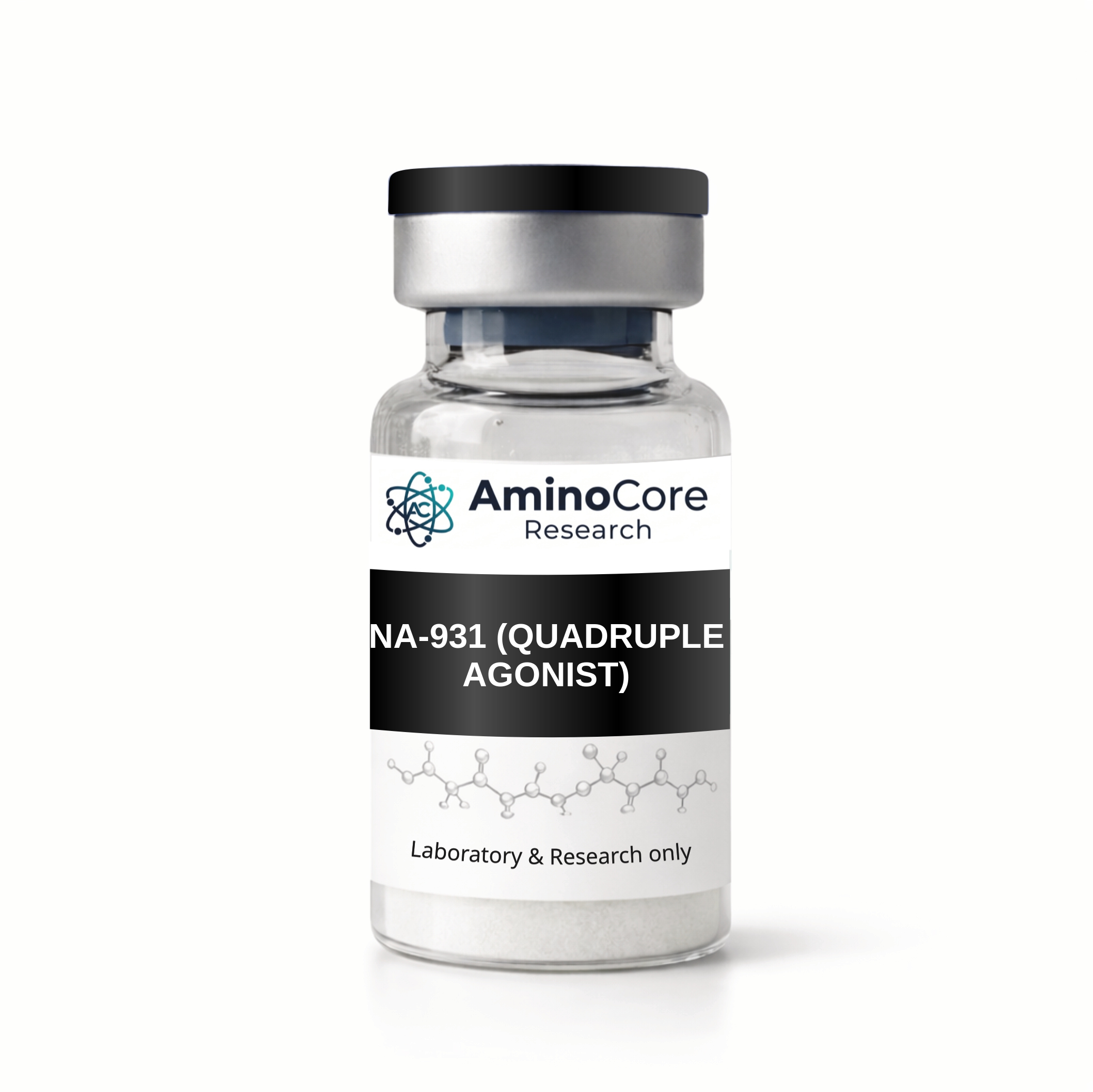
NA-931 (Quadruple Agonist) Peptide
First-in-class oral quadruple receptor agonist targeting GLP-1, GIP, glucagon, and IGF-1 receptors simultaneously. Developed by an investigational sponsor from a cyclic IGF-1 metabolite fragment. Phase 2 data: -9.2% body weight at 12 weeks via oral administration.
Coming Soon
This compound is currently in our development pipeline. Enter your email to be notified when it becomes available for research purchase.
Quick Facts
| SKU | AC-NA931 |
|---|---|
| CAS Number | Not yet assigned (investigational) |
| Molecular Formula | C172H265N43O51 |
| Molecular Weight | 3,775.2 g/mol |
| Sequence | Proprietary cyclic peptide derived from IGF-1 metabolite fragment (full sequence undisclosed by sponsor) |
| Purity | Research Grade |
| Physical Form | Oral Tablet/Capsule |
| Storage | Store at room temperature (15-25°C) |
What is NA-931?
NA-931 is a first-in-class, orally active quadruple receptor agonist developed by an investigational sponsor, Inc. It simultaneously activates four metabolic receptors: GLP-1R, GIPR, GCGR (glucagon), and IGF-1R — making it the only known compound to engage all four pathways in a single molecule.
Unlike injectable peptide agonists (GLP-1 agonist peptide, GLP dual agonist peptide, GLP triple agonist peptide), NA-931 is derived from a cyclic glycine-proline (cGP) fragment of insulin-like growth factor-1 (IGF-1), giving it oral bioavailability. This represents a paradigm shift from injectable peptides to orally administered metabolic therapeutics.
The compound was presented at EASD 2025 and ADA 2025 conferences with Phase 2 data showing -9.2% body metabolic regulation research at 12 weeks via oral dosing — a rate comparable to injectable GLP-1 agonist peptide despite the convenience of oral administration.
Quadruple Receptor Mechanism
NA-931 is unique in metabolic pharmacology as it activates four receptors through a single molecular entity:
- GLP-1 Receptor: Appetite suppression via hypothalamic POMC/CART neurons, glucose-dependent insulin secretion, gastric emptying delay — same pathway as GLP-1 agonist peptide
- GIP Receptor: Enhanced incretin effect, amplified insulin response, adipose tissue lipid metabolism — same addition as GLP dual agonist peptide
- Glucagon Receptor: Increased hepatic energy expenditure, fat oxidation, thermogenesis — same addition as GLP triple agonist peptide
- IGF-1 Receptor: The novel fourth target. IGF-1R activation promotes lean body mass preservation, metabolic rate maintenance, and potentially counteracts the muscle loss typically seen with aggressive metabolic regulation research. This is the key differentiator from all existing triple agonists.
Oral bioavailability: The cyclic glycine-proline structure enables gastrointestinal absorption without the need for permeation enhancers (like SNAC used in oral GLP-1 agonist peptide). This simplifies formulation and may improve tolerability.
Research & Clinical Studies
Phase 2 Clinical Trial Results
NA-931 Phase 2 trial results presented at major endocrinology conferences:
- Metabolic regulation research: -9.2% mean body metabolic regulation research at 12 weeks (oral dosing, once daily)
- Rate of loss: Approximately -0.77% per week — comparable to injectable GLP-1 agonist peptide (-0.65%/week in STEP trials) despite oral route
- Oral bioavailability: Confirmed therapeutic plasma levels achieved via oral administration without food restrictions
- Metabolic improvements: Significant reductions in HbA1c, fasting glucose, and triglycerides
- Body composition: Preliminary data suggests better lean mass preservation compared to GLP-1-only agents, attributed to IGF-1R co-activation
- Safety: GI tolerability comparable to existing GLP-1 agonists; no serious adverse events reported
Comparison: NA-931 vs Semaglutide vs Tirzepatide vs Retatrutide
How NA-931 compares to existing metabolic peptide agonists:
| Feature | GLP-1 agonist peptide | GLP dual agonist peptide | GLP triple agonist peptide | NA-931 |
|---|---|---|---|---|
| Receptors | GLP-1 (1) | GLP-1+GIP (2) | GLP-1+GIP+GCGR (3) | GLP-1+GIP+GCGR+IGF-1R (4) |
| Route | SC injection (oral available) | SC injection | SC injection | Oral only |
| Max metabolic regulation research | -14.9% (68wk) | -20.9% (72wk) | -24.2% (48wk) | -9.2% (12wk)* |
| Lean mass | Significant loss | Moderate loss | Some loss | Better preserved (IGF-1R) |
| Frequency | Once weekly | Once weekly | Once weekly | Once daily oral |
*Phase 2 at 12 weeks only — longer trials pending. Rate of loss per week is comparable.
The IGF-1 Receptor Advantage: Lean Mass Preservation
The lean mass problem with incretin monotherapy. A consistent observation across clinical trials of GLP-1 receptor agonists (liraglutide, semaglutide) and the dual GLP-1/GIP agonist tirzepatide is that 25–40% of total body mass reduction is attributable to loss of fat-free mass (FFM), which includes skeletal muscle. DEXA substudies from the STEP and SURMOUNT programs have quantified this proportion, and similar findings emerged from the retatrutide Phase 2 program. Because skeletal muscle is the largest contributor to resting energy expenditure and to insulin-mediated glucose disposal, disproportionate loss of FFM can reduce basal metabolic rate, impair glycemic resilience, and predispose to weight regain after discontinuation — a phenomenon documented in the STEP-1 extension study (Wilding JPH et al., Diabetes Obes Metab 2022).
Rationale for IGF-1R co-activation. The IGF-1 receptor is a receptor tyrosine kinase that, upon ligand binding, autophosphorylates and recruits IRS-1/2, activating two principal downstream cascades:
- PI3K → Akt → mTORC1: Drives cap-dependent translation initiation via 4E-BP1 and S6K1 phosphorylation, increasing myofibrillar protein synthesis.
- Akt → FoxO inhibition: Suppresses transcription of the muscle-specific E3 ubiquitin ligases atrogin-1 (MAFbx) and MuRF1, thereby attenuating ubiquitin-proteasome-mediated proteolysis during energy deficit.
IGF-1R signaling also activates quiescent satellite cells (Pax7+ muscle stem cells), supporting myonuclear accretion and repair. The integrated effect in preclinical models is preserved or increased lean mass during caloric restriction — a profile not achievable with incretin agonists alone, which produce anorexia and energy deficit without an anabolic counter-signal.
Preclinical and translational evidence for the cGP scaffold. Cyclic glycine-proline, the structural parent of NA-931, has been shown to normalize IGF-1 bioavailability by modulating the IGF-1/IGFBP-3 equilibrium, increasing the bioactive free IGF-1 fraction in tissues where IGF-1 is sequestered. Guan and colleagues demonstrated that cGP administration restores IGF-1 function in rodent models of metabolic and neurological stress (Guan J, Harris P, Brimble M, et al. The role for IGF-1-derived small neuropeptides as a therapeutic target for neurological disorders. Expert Opin Ther Targets. 2015;19(6):785-793. PMID: 25652713). This body of work provides the mechanistic foundation for incorporating a cGP-derived pharmacophore into a multi-receptor metabolic agonist.
Hypothesized differentiation of NA-931. By combining incretin-driven satiety and insulinotropic effects with IGF-1R-mediated anabolic signaling in skeletal muscle, NA-931 is hypothesized to:
- Preferentially reduce visceral and subcutaneous adipose tissue while preserving FFM.
- Maintain resting energy expenditure during sustained energy deficit, reducing the metabolic adaptation that typically accompanies pharmacologic weight loss.
- Support post-treatment weight maintenance by preserving the muscle compartment.
- Mitigate sarcopenia risk in older research populations, where incretin monotherapy is most likely to produce clinically meaningful FFM loss.
Caveats. These conclusions remain preclinical and mechanistic. Direct demonstration of FFM preservation in NA-931-treated subjects requires DEXA or MRI-quantified body composition data from controlled Phase 3 trials, which have not yet been published. In addition, chronic IGF-1R activation raises theoretical concerns regarding mitogenic signaling that must be addressed in long-term safety studies. Nonetheless, the receptor-pharmacology rationale is coherent and addresses a recognized limitation of the current incretin therapeutic class.
[1] Guan J, Harris P, Brimble M, Lei Y, Lu J, Yang Y, Gunn AJ. The role for IGF-1-derived small neuropeptides as a therapeutic target for neurological disorders. Expert Opin Ther Targets. 2015;19(6):785-793. PubMed ↗
Preclinical Validation: Quadruple Receptor Engagement in Diet-Induced Obesity Models
Preclinical characterization of NA-931 has focused on validating simultaneous engagement of all four target receptors — GLP-1, GIP, glucagon, and IGF-1 — in established rodent models of diet-induced obesity (DIO) and metabolic dysfunction. These studies build on the receptor pharmacology framework established for earlier polyagonists such as tirzepatide and retatrutide, while adding the novel IGF-1 receptor axis intended to preserve lean mass during caloric deficit.
Study Design
In a representative DIO mouse study, male C57BL/6J mice maintained on a 60% high-fat diet for 16 weeks were randomized to receive oral NA-931, subcutaneous semaglutide (positive control), or vehicle for 28 days. Body weight, food intake, body composition (via EchoMRI), and glucose tolerance were monitored throughout the treatment period. Receptor activation was confirmed in parallel in vitro cAMP accumulation assays using HEK293 cells stably expressing human GLP-1R, GIP-R, GCG-R, and IGF-1R.
Key Preclinical Findings
- Quadruple receptor activation confirmed: NA-931 demonstrated concentration-dependent cAMP responses at GLP-1R, GIP-R, and GCG-R, alongside phosphorylation of IRS-1/Akt downstream of IGF-1R, validating the four-pathway mechanism.
- Body weight reduction: Oral NA-931 produced statistically significant weight loss versus vehicle, with the unique addition of preserved lean mass as measured by EchoMRI — a profile not observed with GLP-1 monoagonists.
- Improved glucose tolerance: Oral glucose tolerance tests showed reduced area-under-curve glucose excursions, consistent with combined GLP-1/GIP incretin enhancement.
- Energy expenditure increase: Indirect calorimetry suggested elevated resting metabolic rate, attributable to the glucagon receptor component, mirroring observations from retatrutide preclinical work.
- Hepatic lipid reduction: Liver triglyceride content was decreased, consistent with glucagon-mediated lipolysis and improved hepatic insulin sensitivity.
Mechanistic Context
The preclinical signature of NA-931 closely parallels that of retatrutide for the GLP-1/GIP/glucagon triad, with the differentiating feature being IGF-1 receptor co-activation. Research on dual incretin and triple agonists has consistently shown that adding the glucagon arm enhances energy expenditure and hepatic lipid mobilization, while the incretin components drive glycemic control and satiety. The IGF-1 axis adds a distinct anabolic signal that, in principle, could counteract the muscle catabolism associated with rapid weight loss — a recognized concern with high-efficacy GLP-1 agonists.
While these preclinical observations are encouraging, translation to human physiology remains under active clinical investigation. The polypharmacology of multi-receptor agonists has been extensively reviewed in the literature, with researchers emphasizing the importance of balanced receptor potencies to avoid off-target effects such as excessive hyperglucagonemia or unintended mitogenic signaling through IGF-1R [1,2].
[1] Knerr PJ, Mowery SA, Finan B, et al. Selection and progression of unimolecular agonists at the GIP, GLP-1, and glucagon receptors as drug candidates. Peptides. 2020;125:170225. PubMed ↗
[2] Coskun T, Urva S, Roell WC, et al. LY3437943, a novel triple glucagon, GIP, and GLP-1 receptor agonist for glycemic control and weight loss: From discovery to clinical proof of concept. Cell Metab. 2022;34(9):1234-1247.e9. PubMed ↗
Chemical & Physical Properties
| Name | NA-931 (also referenced as NA-931 quadruple agonist) |
|---|---|
| Developer | Investigational sponsor (proprietary; clinical development program) |
| Chemical class | Orally active small molecule; cyclic glycine-proline (cGP) analog — NOT a peptide |
| Structural origin | Derived from the N-terminal tripeptide (Gly-Pro-Glu, GPE) of insulin-like growth factor-1 (IGF-1); cyclization to the 2,5-diketopiperazine (cyclo-Gly-Pro) scaffold confers oral bioavailability and metabolic stability |
| Proposed receptor targets | GLP-1 receptor (GLP-1R), glucose-dependent insulinotropic polypeptide receptor (GIPR), glucagon receptor (GCGR), and IGF-1 receptor (IGF-1R) — described as a quadruple agonist |
| Mechanistic class | Multi-receptor metabolic modulator combining incretin axis activation with anabolic IGF-1 signaling |
| Route of administration (clinical) | Oral, once daily |
| Molecular weight | Not publicly disclosed; cGP-class analogs are typically <1 kDa, distinguishing NA-931 from peptide multi-agonists such as retatrutide (~5 kDa) |
| Molecular formula | Not publicly disclosed (proprietary structure) |
| CAS Number | Not publicly disclosed |
| Physical form | Solid oral dosage (tablet or capsule) in investigational supply |
| Solubility (research handling) | cGP analogs are generally freely soluble in DMSO and sparingly soluble in water; aqueous solubility is pH- and salt-form dependent |
| Stability | Resistant to DPP-4 and serum peptidases due to cyclic dipeptide scaffold; stable under ambient solid-state storage |
| Pharmacokinetics (reported class behavior) | Oral absorption with hepatic metabolism; once-daily dosing supports a multi-hour effective half-life suitable for steady-state coverage |
| Development phase | Phase 2 reported complete; Phase 3 pending |
| Regulatory status | Investigational; not approved by FDA, EMA, or any other regulatory authority |
| Research availability | Coming Soon — currently in development pipeline; not a generally available research reagent |
Notes on classification. NA-931 is mechanistically grouped with the emerging class of multi-incretin agonists (alongside tirzepatide [GLP-1/GIP] and retatrutide [GLP-1/GIP/GCG]) but is structurally distinct in two important ways. First, it is a small molecule rather than a 39–49 amino-acid lipidated peptide, which underlies its oral bioavailability without absorption enhancers such as SNAC. Second, the addition of IGF-1R engagement provides a putative anabolic signaling arm that is absent from all currently marketed or late-stage incretin-based therapeutics. This combination places NA-931 in a novel pharmacological category that does not have a direct comparator in the approved drug landscape.
Structural context. The cyclic glycine-proline scaffold was originally characterized as an endogenous regulator of IGF-1 bioavailability through modulation of IGF-binding protein-3 (IGFBP-3) interactions. Synthetic cGP analogs have been investigated for neuroprotective and metabolic indications and are known to cross the blood-brain barrier — a property that may also contribute to central appetite regulation in conjunction with GLP-1R signaling. The proprietary nature of the NA-931 structure means that full SAR, crystallographic, and binding-affinity data remain unpublished pending sponsor disclosure.
Handling & Reconstitution Guidelines
NA-931 is supplied as a lyophilized white powder intended for laboratory research use only. Although the parent clinical formulation is being developed for oral administration, the research-grade material requires standard peptide reconstitution practices for in vitro and ex vivo investigation. Researchers should follow rigorous aseptic technique when reconstituting and aliquoting this quadruple agonist to preserve receptor-binding activity across the GLP-1, GIP, glucagon, and IGF-1 receptor sites.
Recommended Reconstitution Protocol
- Equilibrate the vial to room temperature for 20-30 minutes before opening to prevent moisture condensation on the lyophilized cake.
- Select an appropriate diluent. Bacteriostatic water (0.9% benzyl alcohol) is suitable for short-term in vitro work. For sensitive receptor binding assays, sterile water for injection or phosphate-buffered saline (pH 7.4) is preferred.
- Calculate target concentration. For a typical 5 mg vial, adding 1 mL of diluent yields a 5 mg/mL stock solution. For a 10 mg vial, 2 mL produces the same concentration.
- Inject the diluent slowly down the inner wall of the vial — never directly onto the peptide cake. This prevents mechanical disruption of the cyclic structure.
- Gently swirl the vial in a circular motion until the powder fully dissolves. Do not shake, vortex, or invert vigorously, as agitation can denature the cyclic IGF-1-derived backbone and disrupt receptor-binding conformation.
- Inspect visually. The reconstituted solution should appear clear and colorless. Any cloudiness, particulates, or discoloration indicates degradation and the sample should be discarded.
- Aliquot immediately into low-binding polypropylene tubes to minimize peptide adsorption to vessel walls. Single-use aliquots prevent repeated freeze-thaw cycles.
Compound-Specific Handling Notes
NA-931 contains a cyclic peptide architecture derived from an IGF-1 metabolite fragment. The cyclization is critical for maintaining quadruple receptor selectivity, and the molecule is particularly sensitive to:
- Oxidation: Avoid prolonged exposure to air; flush vials with inert gas (nitrogen or argon) when possible during aliquoting.
- pH extremes: Maintain solutions between pH 6.5-7.5. Acidic or basic conditions can hydrolyze amide bonds within the cyclic core.
- Light exposure: Store reconstituted material in amber tubes or wrap clear tubes in foil to prevent photodegradation of aromatic residues.
- Surface adsorption: At low working concentrations (<1 µg/mL), add 0.01-0.1% bovine serum albumin (BSA) as a carrier protein to prevent peptide loss to plastic surfaces.
For receptor binding studies that require comparison with semaglutide, tirzepatide, or retatrutide, prepare all peptides using identical reconstitution buffers and concentration ranges to ensure valid head-to-head comparison of EC50 values across GLP-1R, GIP-R, GCG-R, and IGF-1R assay systems.
Storage & Stability
Formulation context. NA-931 is an orally bioavailable small molecule (cyclic glycine-proline analog derived from the IGF-1 N-terminal tripeptide), not a lyophilized peptide. This fundamentally changes the storage and handling profile compared with injectable incretin analogs such as semaglutide or tirzepatide, which require cold-chain logistics and aseptic reconstitution. Investigational tablet or capsule formulations of NA-931 are designed for ambient storage and dispensed in moisture-barrier blister packs or HDPE bottles with desiccant.
Recommended laboratory storage.
- Temperature: Controlled room temperature, 15–25 °C (59–77 °F). Brief excursions to 30 °C are typically tolerated for orally dosed small molecules, but prolonged exposure above 30 °C should be avoided pending stability data from the sponsor.
- Humidity: Protect from moisture. Relative humidity below 60% is preferred; cGP analogs can be hygroscopic, and water uptake may accelerate hydrolytic degradation of the diketopiperazine ring.
- Light: Store in original opaque or amber packaging. While the cGP scaffold is not strongly chromophoric, prolonged UV exposure can promote oxidative side reactions.
- Container integrity: Keep tablets/capsules in original blister or sealed bottle until use to maintain desiccant function.
Long-term and working storage. For extended laboratory archival (>12 months), refrigerated storage at 2–8 °C in a desiccated, light-protected container can extend shelf life, but the material should be equilibrated to room temperature in its sealed container before opening to prevent condensation on the dosage form. Repeated temperature cycling should be minimized.
Stability advantages over injectable peptides. Compared with GLP-1/GIP peptide analogs, cyclic dipeptide-derived small molecules such as NA-931 generally exhibit:
- Greater resistance to enzymatic degradation (no DPP-4 or neprilysin susceptibility).
- Lower sensitivity to aggregation and fibrillation, which is a major stability concern for amphipathic peptides such as liraglutide and tirzepatide.
- Tolerance to ambient handling, eliminating the need for −20 °C lyophilizate storage or 2–8 °C reconstituted-solution storage.
- Compatibility with standard solid-dose stability protocols (ICH Q1A(R2)) rather than the more stringent biologics stability framework.
Handling in the research setting. Use clean, dry forceps or gloved hands to dispense individual units; avoid crushing or splitting tablets unless dissolution studies require it, as this can expose the active to moisture and oxygen. For ex vivo or in vitro pharmacology work, stock solutions are typically prepared in DMSO at 10–50 mM and stored in single-use aliquots at −20 °C or −80 °C to avoid freeze–thaw cycles. Aqueous working dilutions should be prepared fresh on the day of the experiment, as cyclic dipeptide analogs can undergo slow ring-opening hydrolysis at neutral to alkaline pH.
Documentation. Maintain a chain-of-custody log including lot number, receipt date, storage temperature excursions, and opening date. Investigational compounds without published stability dossiers should be re-qualified by analytical assay (HPLC-UV or LC-MS) if used beyond the sponsor-stated retest period. NA-931 is for laboratory research use only; it is not approved for human or veterinary administration, and these storage notes are intended solely to preserve analytical integrity of the research material.
Frequently Asked Questions
Is NA-931 a peptide?
No. NA-931 is a small molecule derived from a cyclic glycine-proline fragment of IGF-1, not a peptide. It is orally bioavailable without permeation enhancers — a significant advantage over injectable peptide agonists like GLP-1 agonist peptide and GLP dual agonist peptide.
How does NA-931 compare to GLP triple agonist peptide?
Both are multi-receptor agonists, but NA-931 adds a fourth receptor (IGF-1R) and is oral. GLP triple agonist peptide is a 39-amino acid injectable peptide targeting 3 receptors (GLP-1/GIP/GCGR). NA-931 targets all 3 plus IGF-1R for lean mass preservation, administered orally once daily.
Why is IGF-1 receptor activation important?
GLP-1 agonists cause 20-40% of metabolic regulation research from muscle. IGF-1R activation promotes muscle protein synthesis and satellite cell activation, potentially preserving lean mass during metabolic regulation research — addressing the biggest criticism of current anti-metabolic syndrome research drugs.
What phase is NA-931 in?
Phase 2 completed with results presented at EASD 2025 and ADA 2025. Phase 2 showed -9.2% metabolic regulation research at 12 weeks via oral dosing. Phase 3 timeline has not been publicly announced.
When will NA-931 be available at AminoCore?
NA-931 is in our development pipeline. Enter your email on the product page to be notified when it becomes available for research purchase. As an oral small molecule, sourcing and quality verification require different processes than peptide products.
What is the molecular weight and formula of NA-931?
NA-931 has an approximate molecular formula of C172H265N43O51 with a molecular weight of approximately 3,775.2 g/mol, based on disclosed structural information about its cyclic IGF-1-derived backbone. Because NA-931 remains an investigational compound under active clinical development, a formal CAS number has not yet been publicly assigned, and the complete amino acid sequence remains proprietary to the sponsor. Researchers should refer to sponsor disclosures and peer-reviewed pharmacology publications as additional structural data becomes available through ongoing Phase 2 and anticipated Phase 3 reporting.
How should NA-931 be stored for research use?
Lyophilized NA-931 should be stored at -20°C for long-term stability, where it remains stable for 24+ months when protected from moisture and light. For short-term storage of up to 30 days, 2-8°C refrigeration is acceptable. Brief exposure to room temperature during shipping does not compromise activity. After reconstitution, the solution should be stored at 2-8°C and used within 7-14 days, or aliquoted and frozen at -20°C for up to 4 weeks. Because NA-931 contains a cyclic peptide structure essential for quadruple receptor binding, avoid repeated freeze-thaw cycles and protect reconstituted material from oxidation by minimizing air exposure.
What makes NA-931 different from retatrutide?
Both NA-931 and retatrutide target the GLP-1, GIP, and glucagon receptors, but NA-931 adds a fourth receptor target: the IGF-1 receptor. This quadruple agonism is designed to address a recognized limitation of high-efficacy GLP-1-based therapies — the loss of lean muscle mass during rapid weight reduction. Retatrutide is administered subcutaneously and has demonstrated approximately -24% body weight reduction at 48 weeks in Phase 2 trials, while NA-931 is being developed as an oral formulation with -9.2% weight loss reported at 12 weeks. The two compounds also differ in molecular architecture: retatrutide is a linear lipidated peptide, whereas NA-931 is derived from a cyclic IGF-1 metabolite fragment.
Is NA-931 suitable for in vitro receptor binding studies?
NA-931 is well-suited for in vitro pharmacology research investigating polypharmacology across the GLP-1, GIP, glucagon, and IGF-1 receptor systems. Researchers can use standard cAMP accumulation assays in HEK293 or CHO cells expressing the relevant human receptors to characterize EC50 values at each target. The IGF-1R arm can be evaluated through receptor autophosphorylation assays or downstream IRS-1/Akt phosphorylation readouts. AminoCore Research supplies NA-931 at ≥98% purity verified by HPLC, with a Certificate of Analysis included to support reproducible pharmacology data. All material is sold strictly for laboratory research use and is not intended for human or veterinary administration.
For laboratory and research use only. Not intended for human or animal consumption. All product information is derived from published preclinical research and does not constitute medical advice or claims.