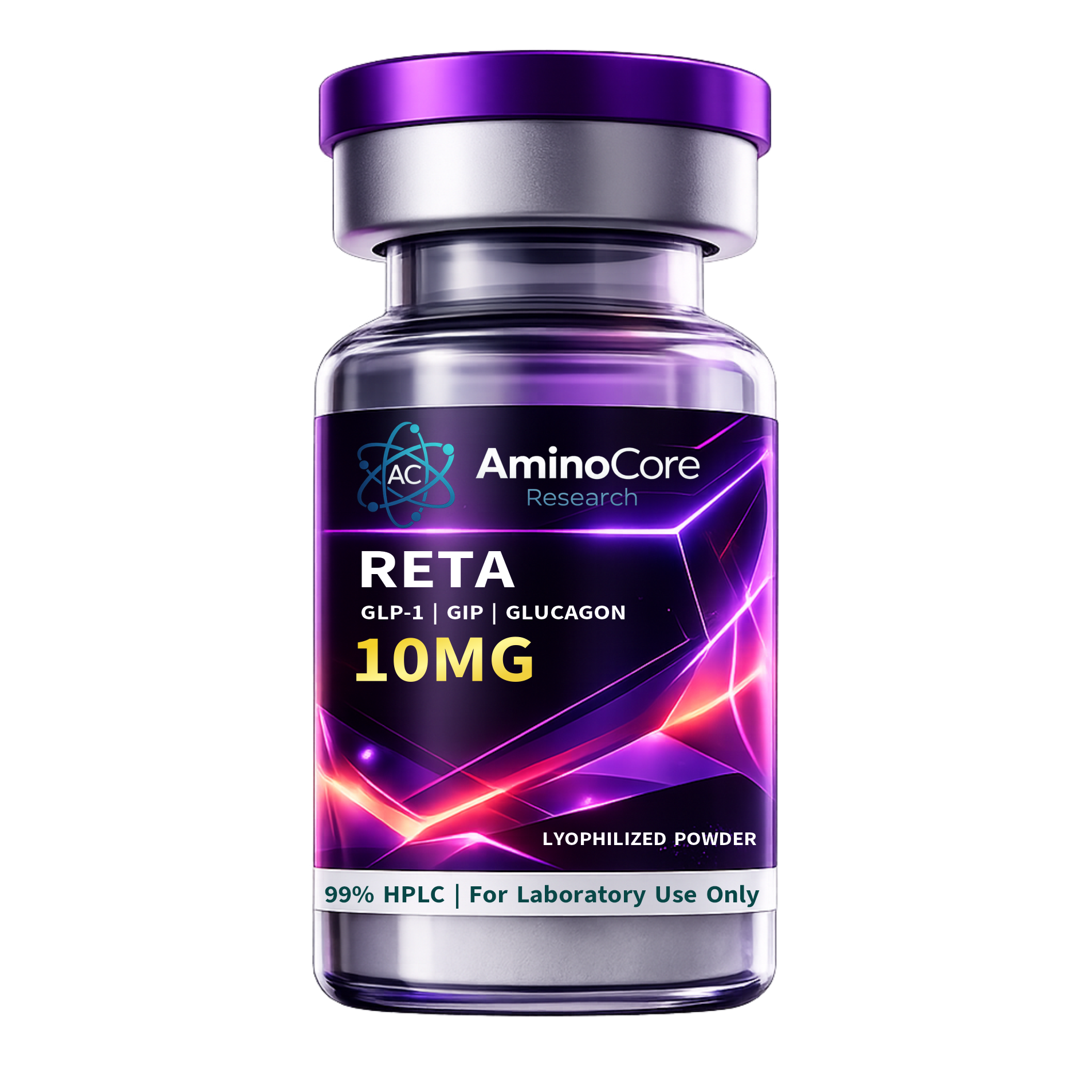
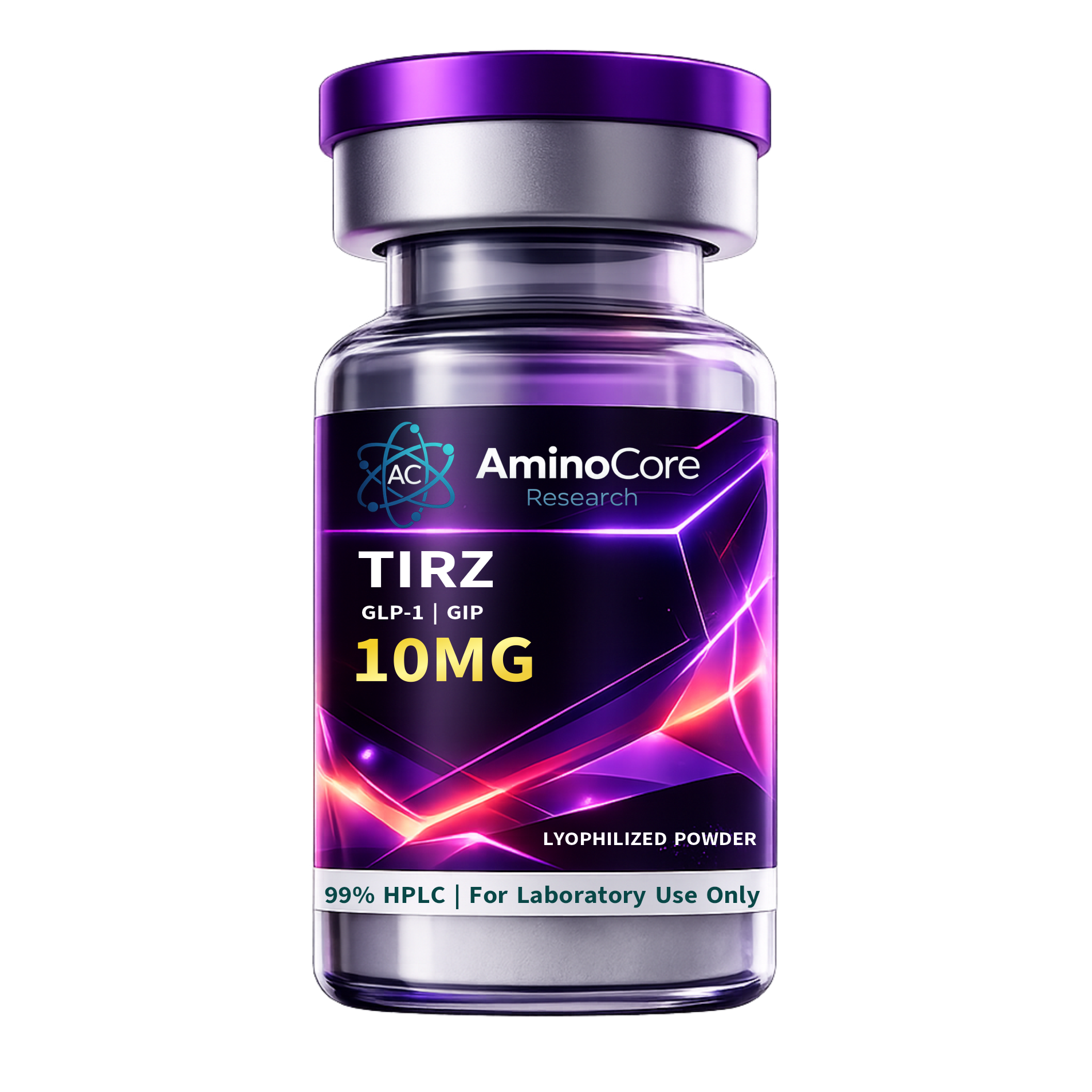
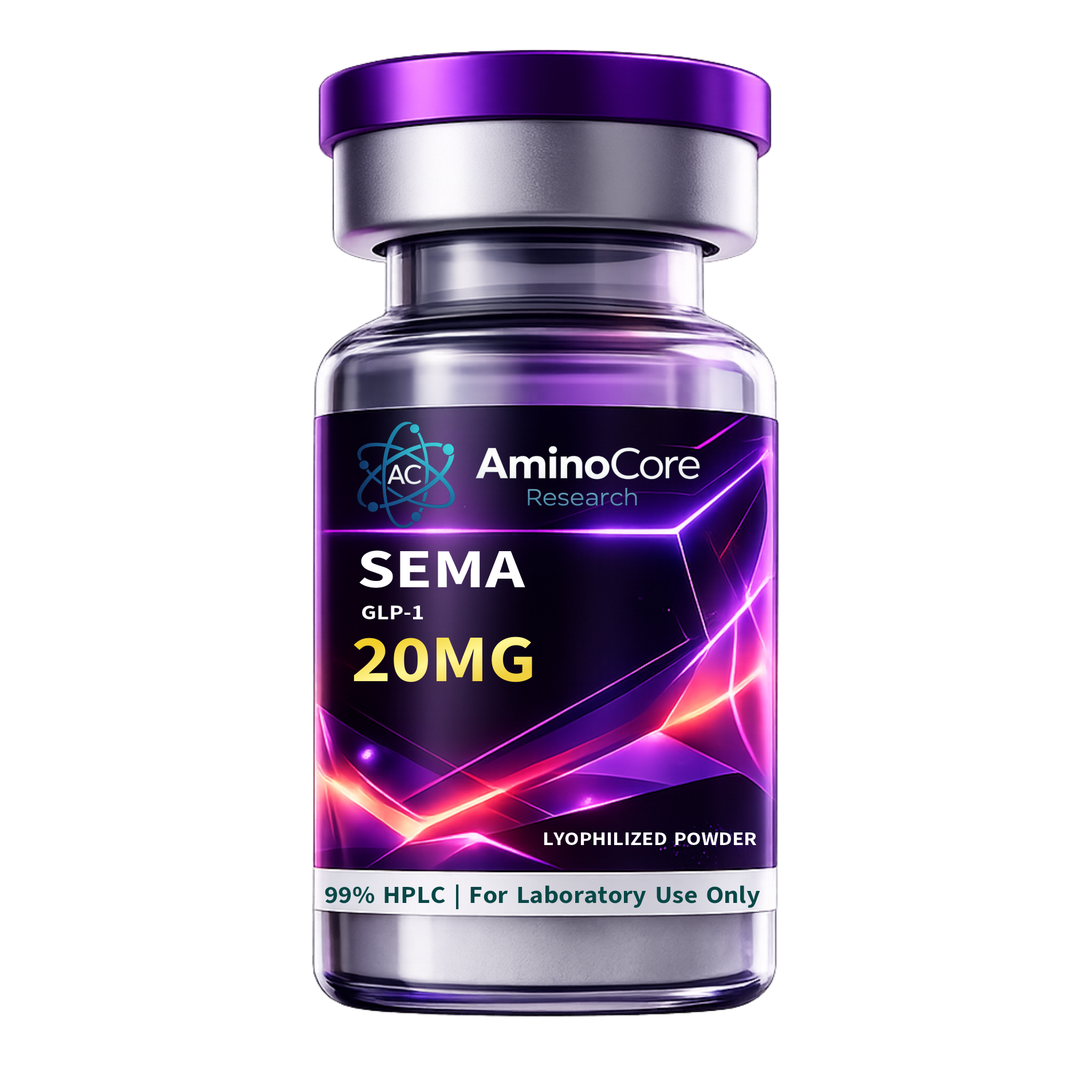
≥98%HPLC Purity
COAIncluded
USAShipped
Semaglutide (GLP-1 Agonist) Peptide
GLP-1 receptor agonist analog with once-weekly pharmacokinetics. 31-amino acid peptide modified with Aib8 substitution and C-18 fatty diacid conjugation. SELECT trial demonstrated 20% cardiovascular risk reduction. Phase 3 data: -14.9% body weight reduction.
Login to view pricing and purchase
Create a free account to see prices, select variants, and place orders.
Log In / Create AccountQuick Facts
| SKU | AC-SEMA |
|---|---|
| CAS Number | 910463-68-2 |
| Molecular Formula | C187H291N45O59 |
| Molecular Weight | 4,113.58 g/mol |
| Sequence | His-Aib-Glu-Gly-Thr-Phe-Thr-Ser-Asp-Val-Ser-Ser-Tyr-Leu-Glu-Gly-Gln-Ala-Ala-Lys-Glu-Phe-Ile-Ala-Trp-Leu-Val-Arg-Gly-Arg-Gly-NH2 |
| Purity | ≥99% |
| Physical Form | Lyophilized Powder |
| Storage | Store at -20°C |
What is GLP-1 SMA?
GLP-1 SMA is a long-acting glucagon-like peptide-1 (GLP-1) analogue consisting of 31 amino acids with a molecular weight of 4113.64 g/mol and CAS registry number 910463-68-2. It was developed through strategic modifications to the native human GLP-1(7-37) peptide sequence to dramatically extend its pharmacokinetic half-life from approximately 2 minutes (native GLP-1) to approximately 165 hours.
The key structural modifications include: substitution of alanine with aminoisobutyric acid (Aib) at position 8, which confers resistance to enzymatic degradation by dipeptidyl peptidase-4 (DPP-4); substitution of lysine with arginine at position 34; and conjugation of a C-18 fatty diacid chain to lysine at position 26 via a mini-PEG linker, enabling non-covalent binding to serum albumin. These modifications collectively allow for once-weekly subcutaneous administration while maintaining potent GLP-1 receptor activation.
GLP-1 SMA has been the subject of one of the most extensive clinical development programs in metabolic medicine, including the SUSTAIN trials (type 2 diabetes), PIONEER trials (oral formulation), STEP trials (weight management), and the landmark SELECT cardiovascular outcomes trial. It is classified as a research peptide at AminoCore Research and is available exclusively for laboratory and scientific investigation.
Mechanism of Action
GLP-1 SMA exerts its biological effects through selective activation of the GLP-1 receptor, a G protein-coupled receptor expressed in pancreatic beta cells, the central nervous system, the gastrointestinal tract, the cardiovascular system, and other tissues.
Pancreatic Effects
GLP-1 receptor activation on pancreatic beta cells stimulates glucose-dependent insulin secretion through increased intracellular cAMP levels and calcium influx. Critically, this insulinotropic effect is glucose-dependent, meaning insulin release is enhanced primarily when blood glucose is elevated, which minimizes the risk of hypoglycemia. Simultaneously, GLP-1 SMA suppresses glucagon secretion from alpha cells in a glucose-dependent manner, reducing hepatic glucose output.
Central Nervous System — Appetite Regulation
GLP-1 SMA crosses the blood-brain barrier and acts on GLP-1 receptors in hypothalamic and hindbrain regions involved in appetite regulation, including the arcuate nucleus, paraventricular nucleus, and the nucleus tractus solitarius. These actions promote satiety, reduce hunger, and decrease food intake. Neuroimaging studies suggest that GLP-1 SMA may modulate food reward pathways and reduce cravings for high-fat and energy-dense foods.
Gastrointestinal Effects
GLP-1 SMA delays gastric emptying, which contributes to reduced postprandial glucose excursions and enhanced satiety. This effect is most pronounced during early treatment and may attenuate partially with continued use, a phenomenon known as tachyphylaxis.
Cardiovascular Mechanisms
GLP-1 receptors are expressed in cardiomyocytes and vascular endothelium. Research suggests GLP-1 SMA may exert cardioprotective effects through anti-inflammatory pathways, reduction of oxidative stress, improved endothelial function, and favorable effects on lipid metabolism. The SELECT trial demonstrated a 20% reduction in major adverse cardiovascular events.
Research & Clinical Studies
STEP 1 Trial: Body Weight Regulation Research
The GLP-1 SMA Treatment Effect in People with Obesity (STEP 1) trial was a landmark randomized, double-blind, placebo-controlled study published in the New England Journal of Medicine in 2021. The trial enrolled 1,961 adults with obesity (BMI ≥30) or overweight (BMI ≥27) with at least one weight-related comorbidity, without diabetes.
Participants were randomized 2:1 to receive once-weekly subcutaneous GLP-1 SMA 2.4 mg or placebo for 68 weeks, alongside lifestyle intervention (reduced-calorie diet and increased physical activity). The co-primary endpoints were percentage change in body weight and achievement of at least 5% weight reduction.
Results demonstrated that the GLP-1 SMA group achieved a mean body weight reduction of 14.9% from baseline compared to 2.4% in the placebo group — an estimated treatment difference of 12.4 percentage points (95% CI, −13.4 to −11.5; P<0.001). Among GLP-1 SMA-treated participants, 86.4% achieved ≥5% weight loss (vs. 31.5% placebo), 69.1% achieved ≥10% weight loss (vs. 12.0% placebo), and 50.5% achieved ≥15% weight loss (vs. 4.9% placebo).
Clinically significant improvements in cardiometabolic risk factors were observed, including reductions in waist circumference, blood pressure, C-reactive protein, and lipid parameters. The safety profile was consistent with the GLP-1 receptor agonist class, with gastrointestinal events (nausea, diarrhea, vomiting) being the most common adverse effects.
[1] Wilding JPH, et al. Once-Weekly Semaglutide in Adults with Overweight or Obesity. N Engl J Med. 2021;384(11):989-1002. PubMed ↗
[2] Rubino D, et al. Effect of Continued Weekly Subcutaneous Semaglutide vs Placebo on Weight Loss Maintenance in Adults With Overweight or Obesity: The STEP 4 Randomized Clinical Trial. JAMA. 2021;325(14):1414-1425. PubMed ↗
SUSTAIN Program: Glycemic Control Research
The GLP-1 SMA Unabated Sustainability in Treatment of Type 2 Diabetes (SUSTAIN) clinical trial program comprised 10 multinational studies evaluating once-weekly subcutaneous GLP-1 SMA (0.5 mg and 1.0 mg) in patients with type 2 diabetes.
SUSTAIN 1 through 6 formed the phase 3a core program, enrolling 7,215 participants. Across these trials, GLP-1 SMA was compared to placebo and active comparators including sitagliptin, exenatide extended-release, and insulin glargine. The primary endpoint in each trial was change in glycated hemoglobin (HbA1c) from baseline.
Consistent findings across the program demonstrated HbA1c reductions of 1.0% to 1.8% with GLP-1 SMA, with a significant proportion of participants achieving HbA1c targets of <7.0%. In head-to-head comparisons, GLP-1 SMA showed superior glycemic control compared to exenatide ER (SUSTAIN 3), insulin glargine (SUSTAIN 4), and sitagliptin (SUSTAIN 2). Notably, GLP-1 SMA also produced significant weight loss across all SUSTAIN trials, with reductions of 3.5 to 6.5 kg versus comparators.
The SUSTAIN 6 cardiovascular outcomes trial (n=3,297) was particularly significant, demonstrating a 26% reduction in the composite outcome of cardiovascular death, nonfatal myocardial infarction, or nonfatal stroke (HR 0.74; 95% CI, 0.58–0.95; P=0.02) over 104 weeks.
[3] Marso SP, et al. Semaglutide and Cardiovascular Outcomes in Patients with Type 2 Diabetes. N Engl J Med. 2016;375(19):1834-1844. PubMed ↗
[4] Ahmann AJ, et al. Efficacy and Safety of Once-Weekly Semaglutide Versus Exenatide ER in Subjects With Type 2 Diabetes (SUSTAIN 3). Diabetes Care. 2018;41(2):258-266. PubMed ↗
SELECT Trial: Cardiovascular Outcomes Research
The GLP-1 SMA Effects on Cardiovascular Outcomes in People with Overweight or Obesity (SELECT) trial was a landmark randomized, double-blind, placebo-controlled cardiovascular outcomes study that enrolled 17,604 adults aged 45 years or older with established cardiovascular disease and BMI ≥27, without diabetes.
Participants were randomized to once-weekly subcutaneous GLP-1 SMA 2.4 mg or placebo and followed for a mean of approximately 40 months. The primary endpoint was the first occurrence of a major adverse cardiovascular event (MACE): cardiovascular death, nonfatal myocardial infarction, or nonfatal stroke.
GLP-1 SMA demonstrated a 20% reduction in the primary MACE endpoint compared to placebo (HR 0.80; 95% CI, 0.72–0.90; P<0.001). This was the first trial to demonstrate cardiovascular benefit with a weight-management medication in a population without diabetes. The cardiovascular benefit appeared early and was sustained throughout the follow-up period.
In a prespecified analysis of weight outcomes, GLP-1 SMA produced sustained weight loss over 4 years, with a mean reduction of 10.2% from baseline at week 208, compared to 1.5% with placebo (P<0.0001). Corresponding reductions were observed in waist circumference (−7.7 cm vs. −1.3 cm) and waist-to-height ratio. The safety profile was consistent with the established GLP-1 receptor agonist class.
STEP 5 Trial: Long-Term Sustained Effects Research
The STEP 5 trial was specifically designed to evaluate the long-term efficacy and safety of once-weekly subcutaneous GLP-1 SMA 2.4 mg over 104 weeks (2 years) — the longest treatment duration in the STEP program. Published in Nature Medicine in 2022, the trial enrolled 304 adults with obesity or overweight with at least one weight-related comorbidity, without diabetes.
Participants were randomized 1:1 to GLP-1 SMA 2.4 mg or placebo, both combined with behavioral intervention. The co-primary endpoints were percentage change in body weight and achievement of ≥5% weight loss at week 104.
At 2 years, the GLP-1 SMA group achieved a mean body weight reduction of 15.2% from baseline, compared to 2.6% with placebo. Improvements in cardiometabolic parameters were sustained throughout the 104-week treatment period, including reductions in waist circumference, systolic blood pressure, HbA1c, fasting glucose, and C-reactive protein.
Notably, 80% of participants with prediabetes at baseline who received GLP-1 SMA reverted to normoglycemia by the end of the trial, compared to 37% with placebo. Among participants with normoglycemia at baseline, 99% maintained normoglycemic status with GLP-1 SMA versus 86% with placebo. These findings suggest a potential role for GLP-1 SMA in diabetes prevention research.
[7] Garvey WT, et al. Two-year effects of semaglutide in adults with overweight or obesity: the STEP 5 trial. Nat Med. 2022;28(10):2083-2091. PubMed ↗
PIONEER Program: Oral Formulation Research
The Peptide Innovation for Early Diabetes Treatment (PIONEER) program evaluated the world's first oral GLP-1 receptor agonist formulation of GLP-1 SMA. The oral formulation utilizes co-formulation with sodium N-(8-[2-hydroxybenzoyl] amino) caprylate (SNAC), an absorption enhancer that facilitates transcellular absorption across the gastric epithelium.
The PIONEER program comprised 10 global clinical trials enrolling over 9,500 patients with type 2 diabetes. Oral GLP-1 SMA was evaluated at doses of 3 mg, 7 mg, and 14 mg daily and compared against placebo, sitagliptin, empagliflozin, liraglutide, and dulaglutide.
At the 14 mg dose, oral GLP-1 SMA demonstrated HbA1c reductions of 1.0% to 1.3% across trials, with a significant proportion of patients achieving HbA1c targets below 7.0%. Weight reductions ranged from 2.3 to 4.7 kg depending on the trial population and comparator. In PIONEER 7, oral GLP-1 SMA 14 mg showed comparable efficacy to injectable liraglutide 1.8 mg at 52 weeks.
The clinical significance of this oral peptide delivery system extends beyond convenience — it represents a technological breakthrough in peptide pharmacology, demonstrating that large peptide molecules can achieve clinically meaningful systemic bioavailability through oral administration.
[8] Husain M, et al. Oral Semaglutide and Cardiovascular Outcomes in Patients with Type 2 Diabetes. N Engl J Med. 2019;381(9):841-851. PubMed ↗
[9] Aroda VR, et al. PIONEER 1: Randomized Clinical Trial of the Efficacy and Safety of Oral Semaglutide Monotherapy. Diabetes Care. 2019;42(9):1724-1732. PubMed ↗
Chemical & Physical Properties
| Property | Value |
|---|---|
| IUPAC Name | GLP-1 SMA |
| Molecular Formula | C₁₈₇H₂₉₁N₄₅O₅₉ |
| Molecular Weight | 4113.64 g/mol |
| CAS Number | 910463-68-2 |
| Amino Acid Count | 31 |
| Key Modifications | Aib8 substitution, Arg34 substitution, C-18 fatty diacid at Lys26 |
| Parent Peptide | GLP-1(7-37) human |
| GLP-1R Homology | 94% sequence identity to native GLP-1 |
| Physical Form | White to off-white lyophilized powder |
| Solubility | Soluble in water, DMSO; slightly soluble in acetonitrile |
| Purity | ≥98% (HPLC verified) |
| Half-life | ~165 hours (enabling once-weekly dosing) |
| Albumin Binding | >99% bound via C-18 fatty diacid chain |
| DPP-4 Resistance | Conferred by Aib substitution at position 8 |
| Storage Temperature | -20°C (long-term), 2-8°C (short-term) |
| Shelf Life | 24 months when stored properly at -20°C |
Handling & Reconstitution Guidelines
Reconstitution Protocol
GLP-1 SMA lyophilized powder should be reconstituted using sterile bacteriostatic water (BAC water) or sterile phosphate-buffered saline (PBS). Allow the vial to equilibrate to room temperature (15-25°C) for approximately 10 minutes before reconstitution. Using a sterile syringe, inject the diluent slowly along the inner wall of the vial. Do not direct the stream onto the lyophilized cake. Gently swirl the vial until the peptide is completely dissolved. Do not vortex or shake vigorously, as this may cause aggregation or denaturation of the peptide.
Recommended Diluent Volumes
For a 3 mg vial: 0.6 mL BAC water yields a 5 mg/mL concentration. For a 5 mg vial: 1.0 mL BAC water yields a 5 mg/mL concentration. For a 10 mg vial: 2.0 mL BAC water yields a 5 mg/mL concentration. Exact volumes should be adjusted based on experimental protocols and desired final concentrations.
Post-Reconstitution Storage
Store reconstituted GLP-1 SMA solution at 2-8°C (refrigerated) and use within 28 days. For extended storage, aliquot into single-use volumes using sterile low-bind microcentrifuge tubes and store at -20°C. Avoid repeated freeze-thaw cycles as these may compromise peptide integrity and biological activity.
Handling Precautions
Use appropriate personal protective equipment (PPE) including nitrile gloves and safety glasses. Work under aseptic conditions to minimize contamination. GLP-1 SMA contains a lipid moiety (C-18 fatty diacid) which may increase adsorption to certain plastic surfaces — use low-bind tubes and tips for precise quantitative work. Use only sterile, single-use needles and syringes for reconstitution.
Storage & Stability Information
Lyophilized Form (Unreconstituted)
Store GLP-1 SMA lyophilized powder at -20°C in its original sealed container, protected from light and moisture. Under optimal conditions, the lyophilized peptide maintains stability and purity for up to 24 months. Short-term storage at 2-8°C is acceptable for up to 60 days without significant degradation. Avoid exposure to temperatures above 25°C or to direct sunlight.
Reconstituted Solution
Store reconstituted GLP-1 SMA at 2-8°C (standard laboratory refrigeration). Use within 28 days of reconstitution. For longer preservation, prepare aliquots in sterile low-bind microcentrifuge tubes and store at -20°C for up to 3 months. Each freeze-thaw cycle may reduce peptide integrity by 2-5%, so single-use aliquots are strongly recommended.
Stability Considerations
The C-18 fatty diacid modification significantly enhances the pharmacokinetic stability of GLP-1 SMA compared to native GLP-1. The Aib substitution at position 8 provides resistance to DPP-4 cleavage, while albumin binding shields the peptide from renal clearance and proteolytic degradation in circulation. However, in the reconstituted form, standard peptide handling best practices should be observed to maintain experimental consistency. Monitor for precipitation or discoloration, which may indicate degradation.
Shipping
GLP-1 SMA is shipped as a lyophilized powder with cold packs. Upon receipt, transfer immediately to -20°C storage.
Frequently Asked Questions
What is Semaglutide?
Semaglutide is a 31-amino acid glucagon-like peptide-1 (GLP-1) receptor agonist with a molecular formula of C₁₈₇H₂₉₁N₄₅O₅₉ and molecular weight of 4113.64 g/mol (CAS 910463-68-2). It is a modified analogue of native human GLP-1 with structural changes that extend its half-life to approximately 165 hours, enabling once-weekly administration. It has been extensively studied in the SUSTAIN, PIONEER, STEP, and SELECT clinical trial programs. AminoCore Research provides semaglutide exclusively for laboratory and research purposes.
How does Semaglutide differ from native GLP-1?
Semaglutide incorporates three key modifications to the native GLP-1(7-37) sequence: (1) substitution of alanine with aminoisobutyric acid (Aib) at position 8, conferring resistance to DPP-4 enzymatic cleavage; (2) substitution of lysine with arginine at position 34; and (3) conjugation of a C-18 fatty diacid chain to lysine-26 via a PEG linker, enabling non-covalent albumin binding. These changes extend the half-life from approximately 2 minutes (native GLP-1) to approximately 165 hours, while maintaining 94% sequence homology with the parent peptide.
What clinical trials have studied Semaglutide?
Semaglutide has been evaluated in one of the most extensive clinical development programs in metabolic medicine. The SUSTAIN program (10 trials) evaluated injectable semaglutide for type 2 diabetes. The PIONEER program (10 trials) evaluated the oral formulation. The STEP program evaluated semaglutide 2.4 mg for weight management in adults with obesity or overweight. The SELECT trial (17,604 participants) demonstrated a 20% reduction in major adverse cardiovascular events. Combined, these programs have enrolled tens of thousands of participants worldwide.
How should Semaglutide be stored?
Lyophilized semaglutide should be stored at -20°C protected from light and moisture, where it maintains stability for up to 24 months. After reconstitution with bacteriostatic water, store at 2-8°C and use within 28 days. For extended storage of reconstituted peptide, aliquot into single-use volumes and freeze at -20°C. Avoid repeated freeze-thaw cycles to preserve peptide integrity.
What purity is available for Semaglutide?
AminoCore Research provides semaglutide at ≥98% purity, verified by High-Performance Liquid Chromatography (HPLC). Each batch includes a Certificate of Analysis (COA) documenting purity, identity, and analytical data to ensure consistency for research applications.
How is Semaglutide reconstituted for laboratory use?
Reconstitute semaglutide lyophilized powder with sterile bacteriostatic water or PBS. Allow the vial to reach room temperature, inject diluent slowly along the vial wall, and gently swirl until dissolved. Do not vortex or shake vigorously. A typical reconstitution volume is 1.0 mL per 5 mg vial (5 mg/mL concentration). Use low-bind labware due to the lipid moiety which may increase surface adsorption.
What is the difference between Semaglutide, Tirzepatide, and Retatrutide?
These three peptides represent an evolution in incretin receptor pharmacology. Semaglutide is a selective GLP-1 receptor agonist (single target). Tirzepatide is a dual GIP/GLP-1 receptor agonist (two targets). Retatrutide is a triple GCGR/GIPR/GLP-1R agonist (three targets). Each successive generation targets additional metabolic pathways, with clinical data showing progressively greater effects on body weight: approximately 15% (semaglutide), 21% (tirzepatide), and 24% (retatrutide) at maximum doses in obesity trials.
What sizes are available for Semaglutide?
AminoCore Research offers semaglutide in three vial sizes: 3 mg, 5 mg, and 10 mg. All vials contain lyophilized powder at ≥98% purity (HPLC verified) and include a Certificate of Analysis. Select the appropriate size based on your experimental protocol requirements and anticipated usage duration.
For laboratory and research use only. Not intended for human or animal consumption. All product information is derived from published preclinical research and does not constitute medical advice or claims.